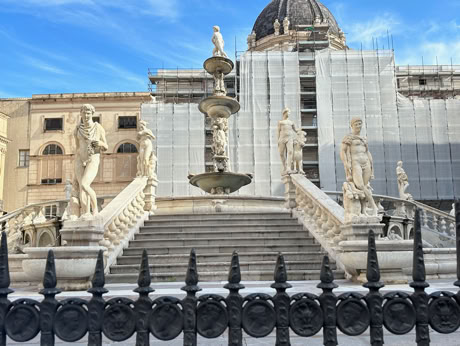
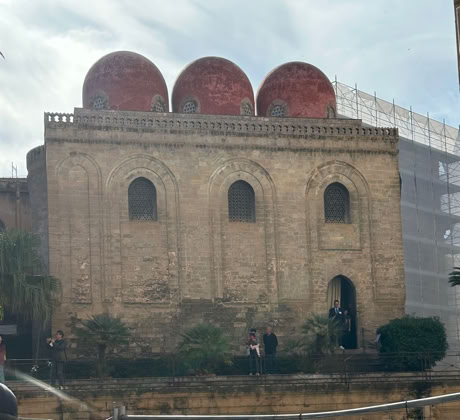
Palermo, Italy
A sunny but temperate day in Palermo. We took a small group walking and driving tour of the city. Palermo, like all Sicilian cities, is built on centuries of many cultures. But this one felt slightly more modern. It has wider streets, some with center divides and horrible, horrible traffic. And semi-crazy drivers. And lots of motor scooters to get around the traffic.
We walked around numerous plazas while our guide shared the history, architectural and otherwise, of the buildings and of the general location. We entered a couple interesting churches, of which there are dozens and dozens, some next door or across the street from one another.
Palermo was divided into four quarters: a Moslem section, a Jewish section, a native Christian section and a section for the current conquering people. They all seemed to get along. Until some conqueror decided they couldn't. For some reason we felt this to be the more interesting of the three cities we saw in Sicily (although the Ortigia island part of Siracusa is pretty cool).
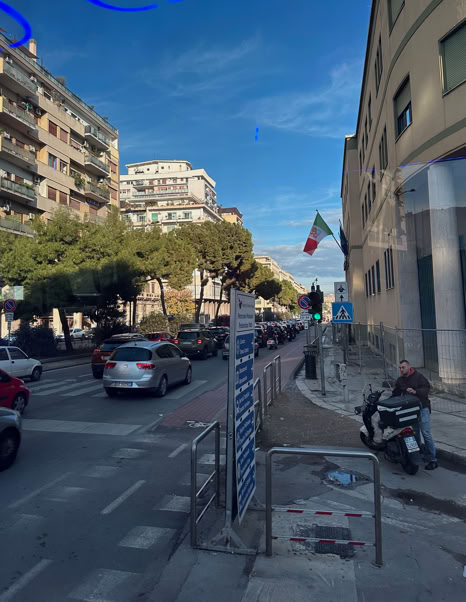
A modern looking city with lots of traffic.
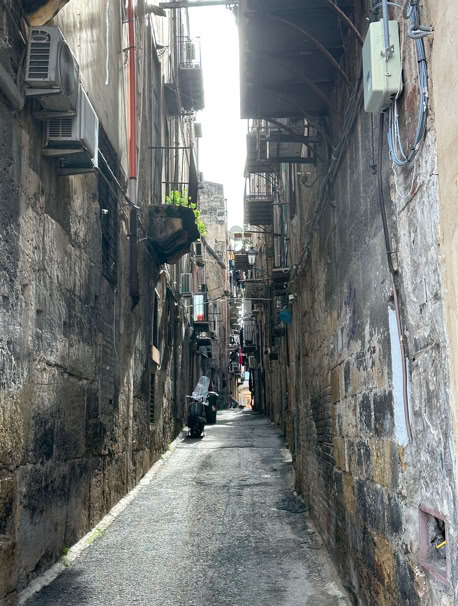
But still with its fair share of narrow streets.
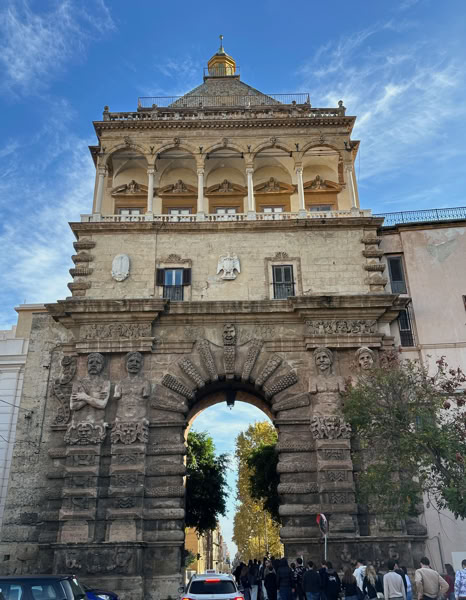
One of the old fortress gateways into the city.
The carvings symbolize the conquered population by the conqueror who built the gateway.
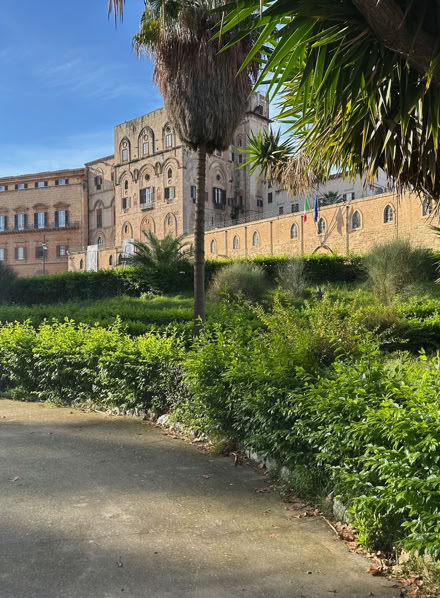
The palace and gardens once you pass through the arched gateway.
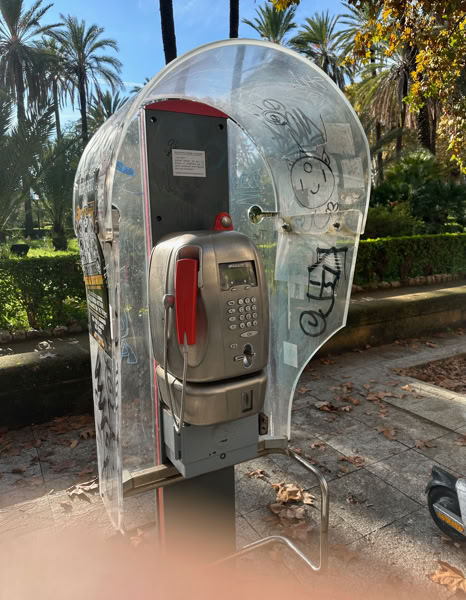
When was the last time you saw a payphone, let alone one that looked like this?
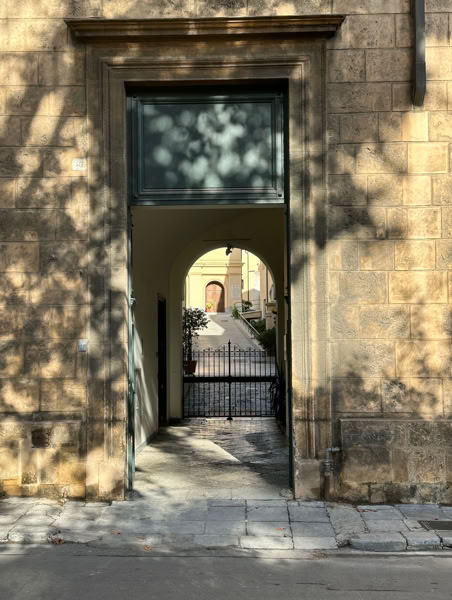
Another rarity: a street entrance to a gate to a door to the building.
Apparently not an uncommon architectural style here.
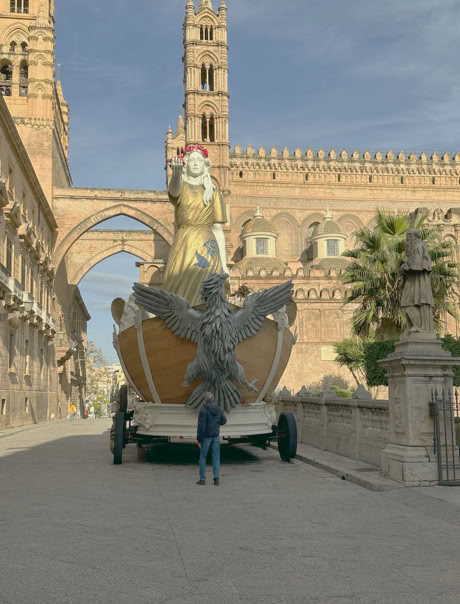
A float with the current patron saint of Palermo.
Note the man standing in front to get a feel for the size of this construction.
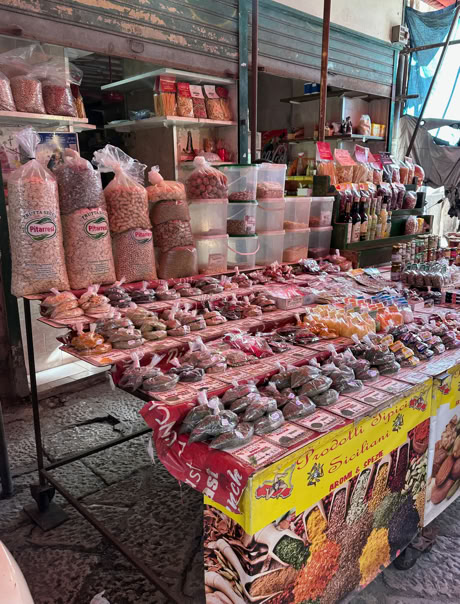
Some of the goods at the local street marketplace.